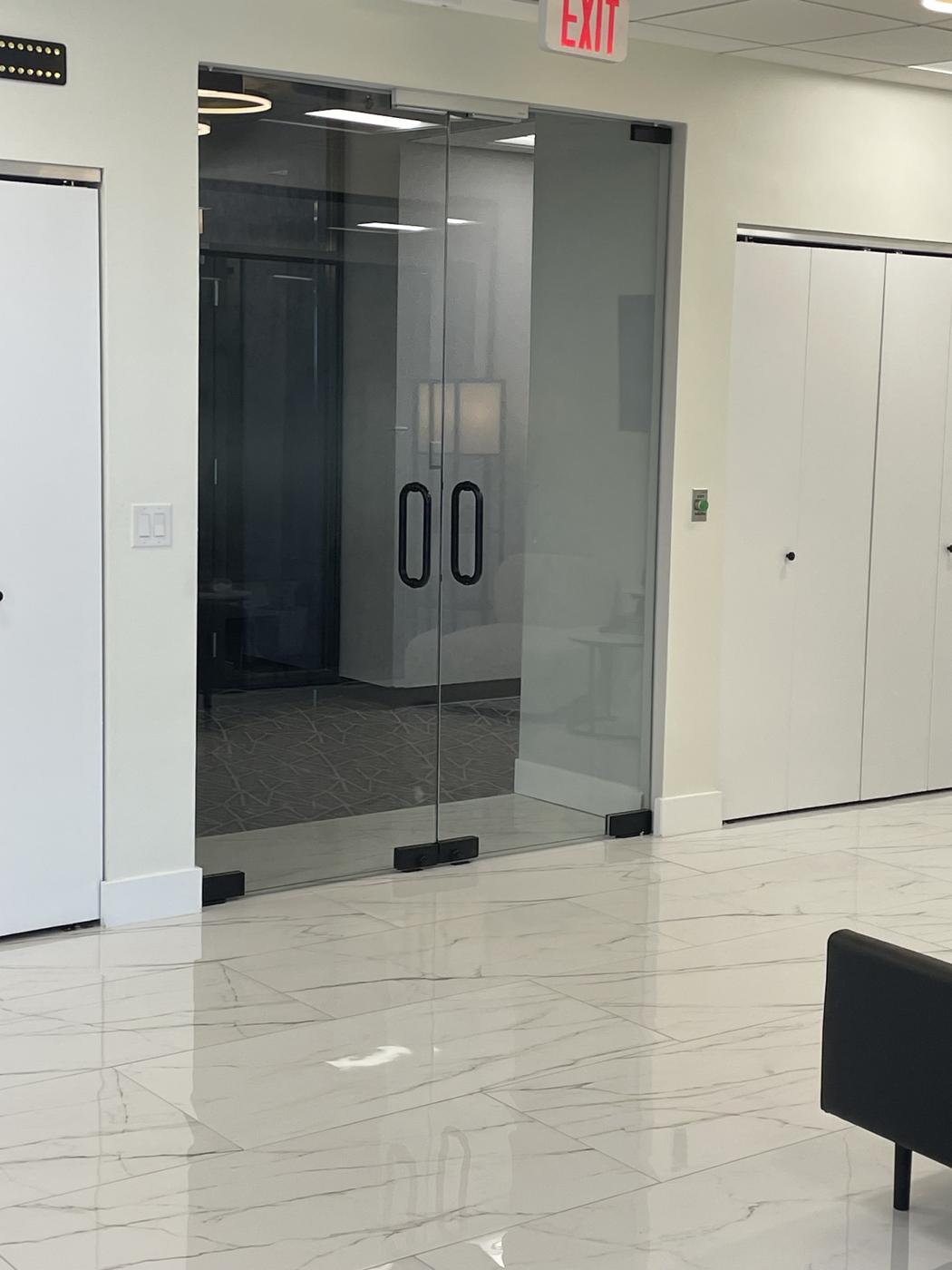
Clear and low-iron glass
Clear glass
Standard float glass. Very clear face-on, with a green tint you can see on the edges and in thick panels. The everyday choice for shower doors, tabletops and windows.
Low-iron glass (Starphire, Optiwhite, UltraClear)
Glass made with less iron, so it's ultra clear with almost no green. White marble and white tile look truly white behind it. Starphire, Optiwhite and UltraClear are brand names for low-iron glass. Popular for frameless showers, display cases and shelves.
Tinted glass
Bronze glass
A warm brown tint that cuts glare and heat. Used in storefronts, commercial windows, smoked glass doors and furniture.
Gray glass
A neutral smoky tint. Cuts glare and adds privacy without changing colors much. Common in office doors, partitions and modern furniture.
Privacy and decorative glass
Acid-etched (satin) glass
Permanently frosted by acid. Smooth to the touch, lets light through and blocks the view. Easier to keep clean than sandblasted glass. Great for water closet doors, showers and office partitions.
Sandblasted glass
Frosted by blasting sand at the surface. Can be done in patterns, bands or logos. Slightly rougher texture.
Rain and patterned glass
Textured glass that blurs the view. Rain glass has a soft water-drop pattern. A classic choice for shower doors and cabinet doors.
Reeded (fluted) glass
Vertical ribs that blur what's behind. A popular design look for showers, office fronts and cabinet doors.
Back-painted glass
Glass painted on the back in any color. Used for kitchen backsplashes, wall cladding and writable glass boards.
Safety glass
Tempered glass
Heat-treated glass that's about four times stronger than regular glass and breaks into small pebbles instead of sharp shards. Required by code for showers, doors and many windows. It can't be cut or drilled after tempering, so it's made to exact size.
Laminated glass
Two layers of glass bonded with a plastic interlayer. If it breaks, the pieces stay stuck in place. Used for railings, overhead glass, storefront security and sound control.
Insulated glass units (IG units)
Insulated glass unit (IGU)
Two panes of glass sealed around a spacer, often with argon gas inside. This is what's in most modern windows and storefronts. When the seal fails, you see fog between the panes, and the unit needs replacing.
Low-E glass
Glass with a thin, nearly invisible coating that reflects heat. Keeps buildings cooler in summer and warmer in winter. Standard in energy-efficient windows and IG units.
Mirror
Clear (silver) mirror
The standard bathroom and wall mirror. Cut to size with polished or beveled edges.
Low-iron mirror
Mirror made on low-iron glass for a brighter, truer reflection with no green cast. Popular in high-end bathrooms.
Gray mirror
A smoky, darker reflection. A modern design choice for accent walls, furniture and bars.
Bronze mirror
A warm, golden-brown reflection. Used for accent walls, bars and furniture.
Antique mirror
Mirror with a deliberately aged, mottled look. Used on accent walls, dining rooms, bars and furniture. Comes in different levels of veining and speckling.
Safety-backed mirror
Mirror with a film on the back that holds the pieces together if it breaks. Recommended for gyms, dance studios and closet doors.